Loading... Today

-- 0

-- 0
Company reports highest-ever domestic sales, record exports of 447,774 vehicles and plans to expand solar power capacity to 319 MWp by FY 2030-31
The Print Times
Having ushered in an automobile revolution in the country, Maruti Suzuki continues to cater to the ever-evolving needs of customers, year after year, with its expansive portfolio comprising of passenger and commercial vehicles. From hatchbacks, to UVs, Vans and light commercial vehicle, Maruti Suzuki’s commitment to innovation and customer satisfaction remains unwavering, making it a trusted choice for car buyers across the nation.
The Company operates four state-of-the-art manufacturing facilities, three of which are located in Haryana at Gurugram, Manesar, and Kharkhoda, while the fourth is located at Hansalpur, Gujarat. In FY 2025-26, the amalgamation of Suzuki Motor Gujarat Private Limited, a wholly owned subsidiary of the Company became effective. As of 30th July 2026, the Company's total installed manufacturing capacity stood at 2.9 million units per annum.
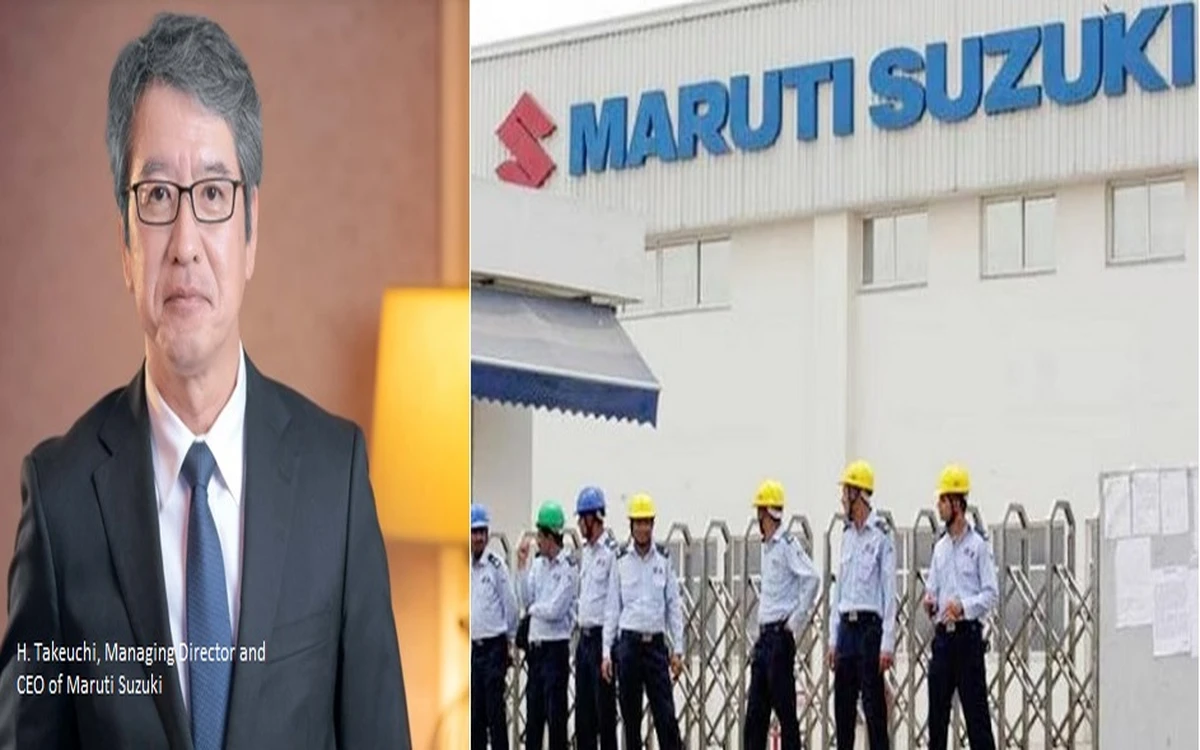
H. Takeuchi, Managing Director and CEO of Maruti Suzuki, in the Annual Report for FY 2025-26, said mobility is not merely about transportation. It enables people to access opportunities, improve their quality of life, participate more actively in the economy and pursue their aspirations with greater confidence.
He said for mobility to deliver its full social and economic value, it must be inclusive and equitable and should reach first-time buyers, young families, rural customers, urban professionals and aspiring households alike. “This belief has guided Maruti Suzuki since its inception and continues to shape our decisions today,” he said.
Small Car Segment Revival
According to Mr. Takeuchi, one of the most encouraging developments during FY 2025-26 was the revival of the small car segment led by GST reduction.
Small cars have historically democratised mobility in India and have served as the first step into car ownership for millions of families. Their recovery is important not only for the automobile industry, but also for expanding access to safer and more comfortable mobility across society.
He said mobility has its greatest impact when it empowers people in their everyday lives. Small cars signaled the return of a broader consumer base, while the SUV portfolio was strengthened with the launch of Victoris and e Vitara.
“As a result, we could achieve highest-ever sales volume in domestic market in FY 2025-26,” Mr. Takeuchi said.
Another notable highlight of FY 2025-26 was the continued strength of exports despite an increasingly dynamic geopolitical environment. By leveraging Suzuki’s global distribution network, Maruti Suzuki vehicles are now sold in nearly 120 countries. According to the company, this broad geographical presence has reduced dependence on any single region and strengthened business resilience.
Record Sales and Exports
During FY 2025-26, the Company achieved several significant milestones. Annual production exceeded 2 million units for the second consecutive year, while annual sales reached a record 2.42 million vehicles.
This included the highest-ever export volume of 447,774 vehicles. In FY 2025-26, Maruti Suzuki alone contributed to nearly 50% of overall passenger vehicles exported from India.
The Company remained India's leading exporter of passenger vehicles for the fifth consecutive year. Revenue increased to an all-time high of over INR 1.8 lakh crore, while profit after tax of about INR 144,454 million also reached record levels.
Consequently, the Board has recommended the highest-ever dividend of INR 140 per share.
Capacity Expansion Accelerated
Reflecting its confidence in the medium-term outlook, Maruti Suzuki accelerated its capacity expansion plans.
“During FY 2026–27, we added 500,000 units of manufacturing capacity,” Mr. Takeuchi said.
The capacity expansion comes alongside the company's focus on strengthening its product portfolio and supporting future mobility demand.
EV Readiness and Multi-Pathway Strategy
Mr. Takeuchi said the transition to electric mobility requires much more than launching a vehicle. Building customer confidence requires the creation of a reliable and convenient ecosystem around EV ownership.
Accordingly, Maruti Suzuki continues to strengthen EV readiness across its ecosystem through an expanding charging infrastructure, EV-ready service workshops and partnerships with charge point operators.
“Our focus remains on making electric mobility practical, convenient and accessible to customers,” he said.
For a country as large and diverse as India, the company believes no single technology pathway can adequately address all mobility needs. Therefore, its approach remains centered around a multi-pathway strategy comprising Battery Electric Vehicles, Strong Hybrid Electric Vehicles, CNG, Compressed Biogas (CBG), E20-compatible vehicles and Flex Fuel technologies.
The company believes such an approach offers a practical pathway towards carbon reduction while preserving affordability, customer choice, energy security and suitability to local conditions.
By pursuing a multi-powertrain approach, Maruti Suzuki said it could achieve its CAFE (Phase-2) target for FY 2025-26 by a good margin.
Solar Power Capacity to Reach 319 MWp
Maruti Suzuki continues to improve resource efficiency and reduce energy demand by adopting Suzuki’s core philosophy of Sho-Sho-Kei-Tan-Bi, which translates to smaller, lighter, fewer, shorter and more beautiful.
At the same time, the Company is transitioning towards clean energy driven by renewable electricity and increasing use of biogas as a process fuel.
The Company has plans to expand its solar power generation capacity from 79.2 MWp to 319 MWp by FY 2030-31. Besides, to maximise the use of renewable power, it procures green power from external sources and uses a Battery Energy Storage System (BESS) having a capacity of 1 MWh.
By 2027, the capacity of the in-plant biogas plant will increase to 10.7 TPD from 0.7 TPD. The Company is also increasingly adopting rail-based logistics to reduce logistics-related emissions.
Responsible Value Chain and Skill Development
The Company remains committed to building a responsible and resilient value chain. Cumulatively, human resource systems and human rights practices were assessed for local Tier-1 suppliers accounting for 84% of component purchases by value.
During FY 2025-26, over 2,550 training programmes were conducted covering 100% of Tier-1 suppliers and dealer partners, while a comprehensive governance framework was extended across all Tier-1 suppliers to strengthen transparency, risk management and ethical practices.
In skill development, the Company is working towards creating livelihood opportunities for Indian youth by imparting training in relevant skills through the Japan India Institutes for Manufacturing (JIM) set up by the Company and by supporting 144 Industrial Training Institutes (ITIs) nationwide.
Over 19,600 students were trained in FY 2025-26. The programme aligns with the Government of India’s Skill India initiative.
Community Development Initiatives
The Company undertakes community development initiatives near its facilities, focusing on healthcare, education, sanitation and infrastructure.
Its multispecialty hospital and Podar Learn School in Sitapur, Gujarat, both in their fifth year of operation, have served over 150,000 patients and provided quality education to local students.
The Fermented Organic Manure (FOM) initiative, undertaken in collaboration with agricultural and research institutions, expanded across nine states to evaluate its potential and promote sustainable farming practices among over 200,000 farmers.