Loading... Today

-- 0

-- 0
The Print Times
Global Ports
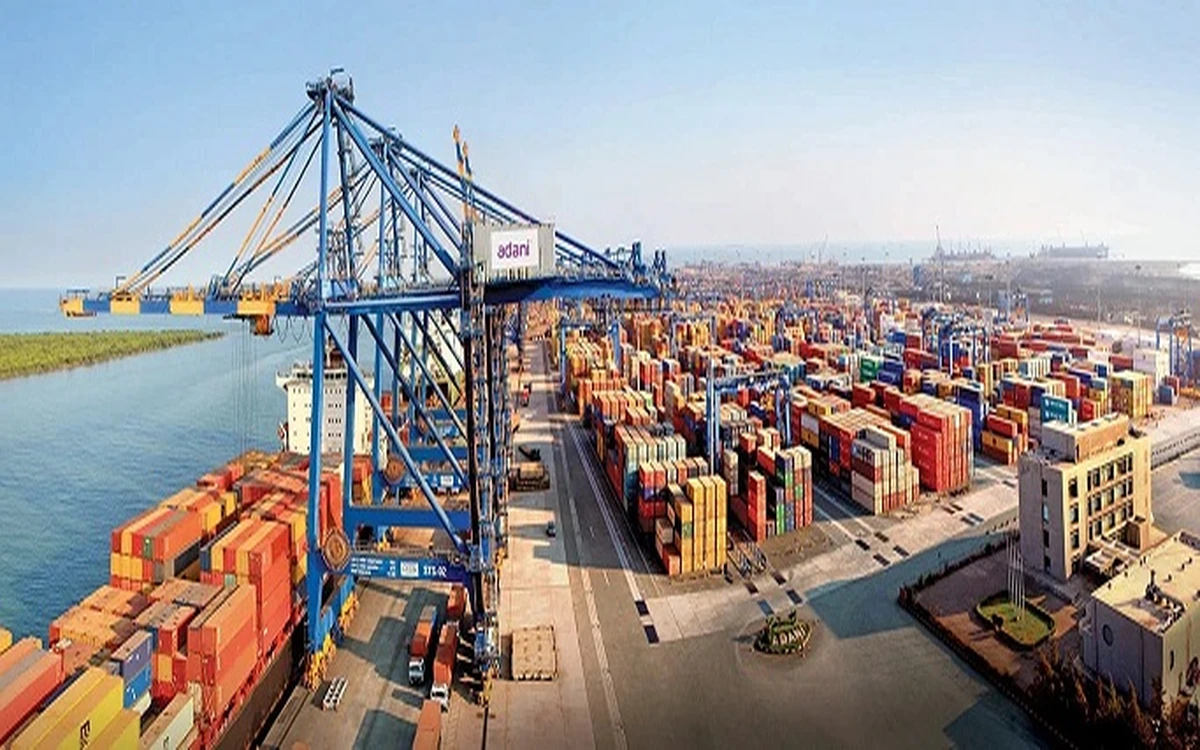
Global ports and maritime trade form the backbone of international commerce, handling over 80% of global merchandise trade volumes through container terminals, bulk facilities, and specialised energy ports.
The global port infrastructure sector presents a strong growth opportunity, currently valued at ~USD 174 billion and projected to reach USD 289.32 billion by 2035, growing at a CAGR of 5.16%. This sustained expansion, driven by rising global trade and continued investments in port modernization, highlights the sector’s long-term resilience and attractiveness.
The UNCTAD Review of Maritime Transport 2025 documents seaborne trade reaching 12,720 million tonnes in 2024 with 2.2% volume growth, though tonne-mile demand surged 5.9% to 66,781 billion tonne-miles due to Red Sea rerouting, adding 30% voyage distances around the Cape of Good Hope. Suez Canal transits fell to 70% below 2023 averages through May 2025, redirecting Asia-Europe container flows and inflating transport costs while highlighting port resilience through alternative routing. UNCTAD data shows Asian ports leading connectivity, with China, Korea, Singapore, and Malaysia topping LSCI rankings in 2025, while India entered top 10 via Mundra and JNPT's 24,000 TEU vessel calls.
Challenges persist with geopolitical risks, and crane supply constraints (because 80% are Chinese-made). UNCTAD forecasts 0.5% growth for total seaborne trade in 2025. Containerised trade expects a 1.4% rise. Risks persist from US-China tariffs, Red Sea tensions, and excess fleet capacity. Ports need investments in green fuels and digital systems.
India’s EXIM Trade
India’s EXIM trade demonstrated steady growth momentum in FY 2025-26. Merchandise exports during the year stood at US$ 441.78 billion, reflecting a year-onyear increase of 0.93%. Non-petroleum exports rose to US$ 387.88 billion, while non-oil and non-gems & jewellery exports reached US$ 359.67 billion, registering growth of 3.62% and 4.22%, respectively.
Strong manufacturing revival fuels this uptick. Export orders gain traction amid better global demand. Ongoing trade negotiations create favourable conditions. India's accommodative monetary stance supports competitiveness. These factors positioned the whole fiscal year for continued positive growth across merchandise categories.
Indian Ports Sector
India's port sector manages 95% of trade by volume and 70% by value. Major ports handled 915.17 million tonnes (MT) of cargo in FY 2025-26, up 4.3% from 855 million tonnes in FY 2024-25.
The country operates 12 major ports along with more than 200+ minor and intermediate ports, all key to supporting trade and business activity. The government pushes growth through the National Perspective Plan for Sagarmala. This includes plans to build six new mega ports. These steps strengthen infrastructure to meet rising trade needs.
India's coastline measures 11,099 kilometres. The government backs the ports sector with Foreign Direct Investment (FDI) up to 100% under the automatic route for port and harbour construction and maintenance projects. It also provides a 10-year tax holiday for companies developing, maintaining and operating ports and inland waterways. This policy setup draws investment and spurs growth in the maritime field. The measures help position India as a strong player in worldwide trade.
Container traffic surged 9% in FY26 to 27.02 Million TEUs. Coal, POL products, and iron ore dominate volumes.
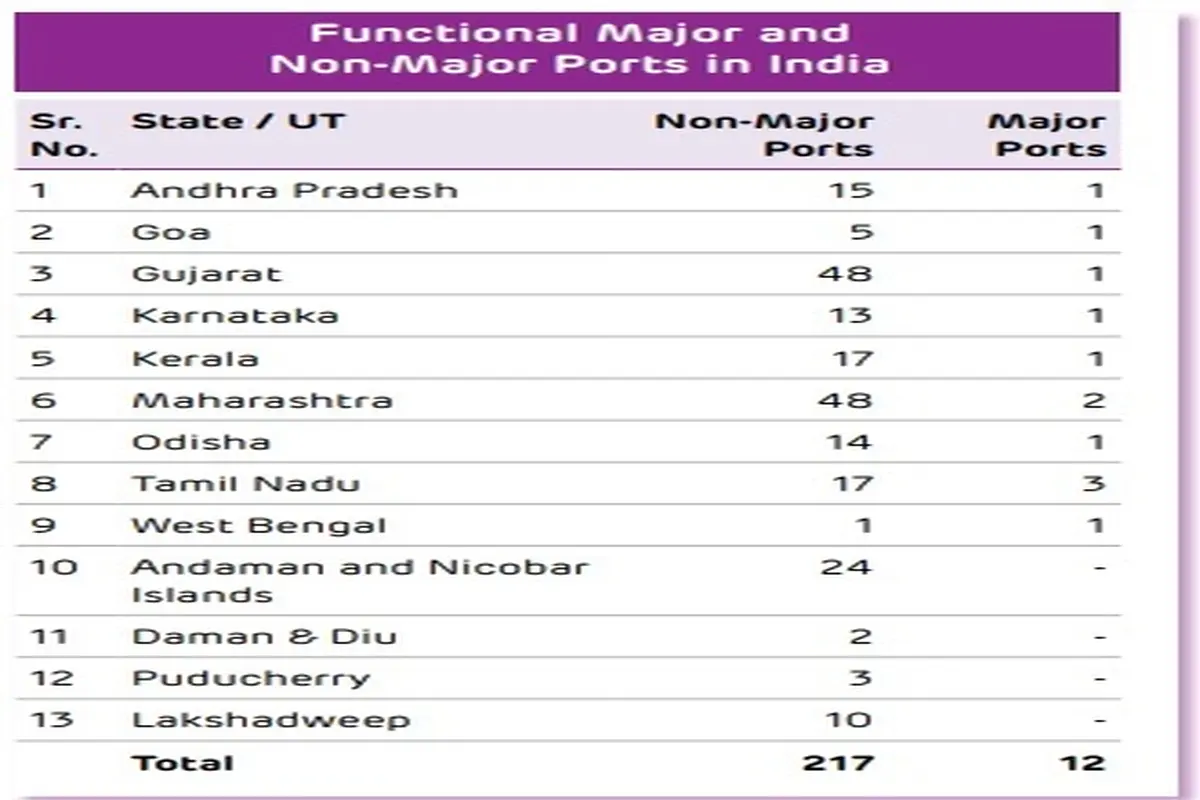
Major ports achieved a 7.5% CAGR in total income over 10 years, doubling from INR 11,760 crore in FY 2014-15 to INR 24,203 crore in FY 2024-25. Operating ratio fell from 64.7% to 42.3%, showing better efficiency. Capital expenditure (Capex) for the maritime sector expanded significantly, with total investment across Internal and Extra Budgetary Resources (IEBR) and Public-Private Partnership (PPP) reaching INR 14,953 crore in FY 2025-26. This marks a substantial increase over the INR 9,708 crore recorded in FY 2024-25, reflecting an intensified focus on infrastructure modernisation and enhanced private sector participation to drive port capacity.
Port capacity expansion requires a INR 390 billion in capital spending. Under the Sagarmala Programme, the maritime sector continues to witness large-scale infrastructure expansion. Currently, 845 projects valued at INR 6.06 lakh crore are under implementation, with 315 projects worth INR 1.57 lakh crore already completed. Notably, the completion of 7 coastal berth projects has successfully added 9.84 million tonnes per annum (MTPA) to the national cargo handling capacity.
Building on this momentum, Sagarmala 2.0 has been launched with a financial outlay of INR 85,482 crore. This next phase is strategically designed to catalyse an additional INR 3.6 lakh crore in investment, further modernising India's port-led development framework.
India’s ports sector is expected to regain momentum from FY 2026-27, supported by improving cargo flows, new capacity additions and better logistics connectivity. Likely to grow faster than the broader market and recover more strongly in FY 2026-27 as demand normalises and trade conditions improve.
The long-term outlook remains constructive. The Maritime India Vision 2030 projects cargo traffic at 2,570 million tonnes by 2030, while national port capacity has already expanded significantly over the past few years. A major catalyst for the next phase of growth will be the completion of infrastructure linkages such as freight corridor connectivity, port modernisation and the continued shift toward containerised and coastal cargo movement.
Impact of Global Geopolitical Tensions on India's Ports and Infrastructure
Global conflicts and geopolitical shifts continue to pose challenges for India’s ports and infrastructure sectors, requiring businesses to adapt to changing trade routes and higher operating uncertainty. While the Red Sea disruptions have already affected transit times and freight costs for trade with Europe, the situation has now widened with the Russia-Ukraine conflict and the escalating West Asian conflict, both of which are influencing energy flows, shipping routes and global supply chains. These developments have increased pressure on freight rates, insurance costs and delivery schedules, while also adding uncertainty to merchandise trade and cargo movement. At the same time, shifting sanctions, rerouting of vessels and changes in sourcing patterns are likely to keep trade flows uneven in the near term. In this environment, long-term initiatives such as the International North-South Transport Corridor may gain strategic relevance as countries look for more resilient and diversified trade connections.

2 days ago
Total Views : 43

2 days ago
Total Views : 18
3 days ago
Total Views : 59
3 days ago
Total Views : 12
3 days ago
Total Views : 86
3 days ago
Total Views : 21

last week
Total Views : 25
last week
Total Views : 67
2 weeks ago
Total Views : 122
2 weeks ago
Total Views : 94