Loading... Today

-- 0

-- 0
HDFC Bank Managing Director and Chief Executive Officer Sashidhar Jagdishan, while replying to investors during the Q1 FY27 Concall, discussed the bank’s margin outlook, cost of funds, borrowing mix, asset mix, branch network, savings account market share and CASA ratio.
The Print Times
On margins, Jagdishan said the biggest opportunity was in the cost of funds and that, compared with historical norms and industry levels, there could be a 40–50 basis point change, although it would not happen quickly.
“There are two aspects as you know, one, the cost of funds is the biggest opportunity on the margin where compared to our historical norms as well as compared to what we have seen in the industry as such, there can be 40, 50 basis points change, but it is not going to change in a hurry.”
He said the liquidity scenario in the country would need to be different for rates to stabilise. According to Jagdishan, average liquidity in the system during the recent quarter was about 2.08 trillion, while the peak was 5.5 trillion and the trough was negative 0.43 trillion.
“We need that standard deviation to that average to be minimal so then there could be an active market where the rates can stabilize well.”
He also said the FCNR or swap window was part of the policy direction to ensure adequate flows and stabilisation of rates.
Jagdishan said the liquidity scenario determines deposit costs, particularly non-retail deposit costs. While retail deposit costs have remained steady, he said non-retail deposit costs have remained elevated.
On the borrowing mix, he said it remained at about 11% and was an area the bank continued to watch. He added that the borrowing mix would not change in the short term or in a hurry.
“One is I do want to mention that the borrowing mix which is at 11%, we don't expect that it will just settle at 8% or 9%, right? The industry is more like a 5% or a 6%, right? So we do think that the maturity should take care of that to some extent and the overall growth should also take care of it to the balance of the extent because as the growth happens and you don't need to fund only through borrowing, so then the borrowing percentage will dwarf and come down.”
Asset Mix Remains an Important Margin Contributor
Jagdishan said the mix of assets was also an important contributor to longer-term margins. He said the bank currently had a 52% retail mix, compared with about 60% based on its experience.
“On the asset side, the mix of assets is also an important contributor for a longer-term margin. Today we are at a 52% retail mix. At our kind of an experience that we have seen, we were at about 60% or so and we always have thought that India's consumption component of the GDP is at about 60% and that's where we want to be as far as the retail mix is concerned because that's where we will mirror the economic growth and fortunes in the country so we can be going in tandem with that. And so, that mix of the asset is also an important contributor on that.”
On asset yield, Jagdishan said the bank would need to wait for the full year to assess whether margins had bottomed out, as different types of loans are booked at different times during the year.
He said the bank was well positioned on a full-year basis because of its reach and customer selection.
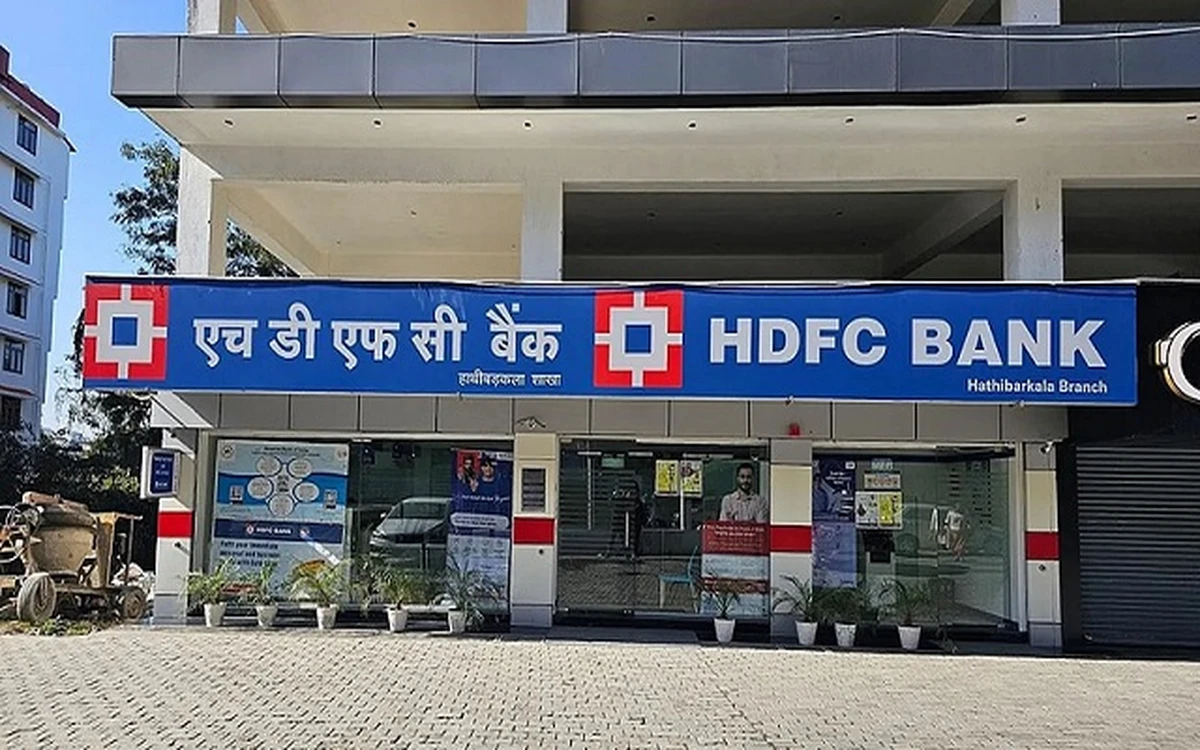
HDFC Bank Branch Network
Discussing the branch network, Jagdishan said close to 40% of the bank’s branches were less than five years old. He said the bank had made a significant addition to branches during the period referred to by investors.
Jagdishan said per-branch metrics had improved from INR 266 crores in FY23 to about INR 330 crores currently, compared with less than INR 200 crores further back.
“So the point is the branch addition at an aggregate level, the early vintages are performing to the legacy branch vintages and the legacy branch vintages are also progressing towards what a 10-plus years and a 15-years plus years will do, which is what is demonstrated in the average per branch when you see it INR330 crores per branch is extremely productive and one of the best in class in the industry on a per branch basis. So, the branches are behaving according to the model that is envisaged.”
He said branches were important not only for deposits but also for the growth of retail assets and small and medium enterprise loans.
“One thing I want to mention is that while it's very important that the branches are the key arm to get the deposits in, branches are a very significant part of how we grow part of the retail assets and the small and medium enterprises loans, SME loans.”
He added that wholesale, top corporate and mid-corporate loans were centrally managed through various relationships, while branches handled other segments.
Savings Account Strategy Focused on Customer Addition
On savings account market share, Jagdishan said household deposit growth in the country remained among the lowest across different categories of deposits.
“In terms of the SA, the savings account that you mentioned, one thing that if you look at the household deposit growth in the country as such, when you're looking at the data that gets published by RBI across various categories, segmentation of deposits, household deposit growth is one of the lowest among various, right?”
He said the bank was not relying on household deposit growth increasing sharply from 8–9% to 15%. Instead, the approach was to increase the number of customer units and improve unit economics.
“Because we are not counting on the household deposit growth to go from 8%, 9% to a 15%. That may happen, may not happen, but that's not our approach. Our approach is to increase the units to get that benefit.”
Jagdishan said HDFC Bank had more than 100 million customers and was focused on scaling while keeping costs under control and improving efficiency.
CASA Ratio and Low-Cost Funds
On the CASA ratio, Jagdishan said there had been a significant change in household savings patterns over the last three years.
He said the bank was seeking to gain more incremental market share in low-cost funds compared with its existing stock share.
“Obviously there has been a significant change in the household savings pattern over the last three years more so. So, what are we trying to do? We're trying to see how we can gain more incremental market share on our low-cost funds much more than what we have as as a stock share.”
He added that the bank’s appetite for growth also required it to grow time deposits. Since time-deposit growth had been higher than low-cost funds growth over the last couple of years, the CASA ratio had consequently remained somewhat lower.
“So therefore, the CASA ratio has been a little bit on the lower side.”
4 days ago
Total Views : 19
6 days ago
Total Views : 30
6 days ago
Total Views : 71
3 weeks ago
Total Views : 188