Loading... Today

-- 0

-- 0
Join Groups & Channels, No Spamming





The Print Times
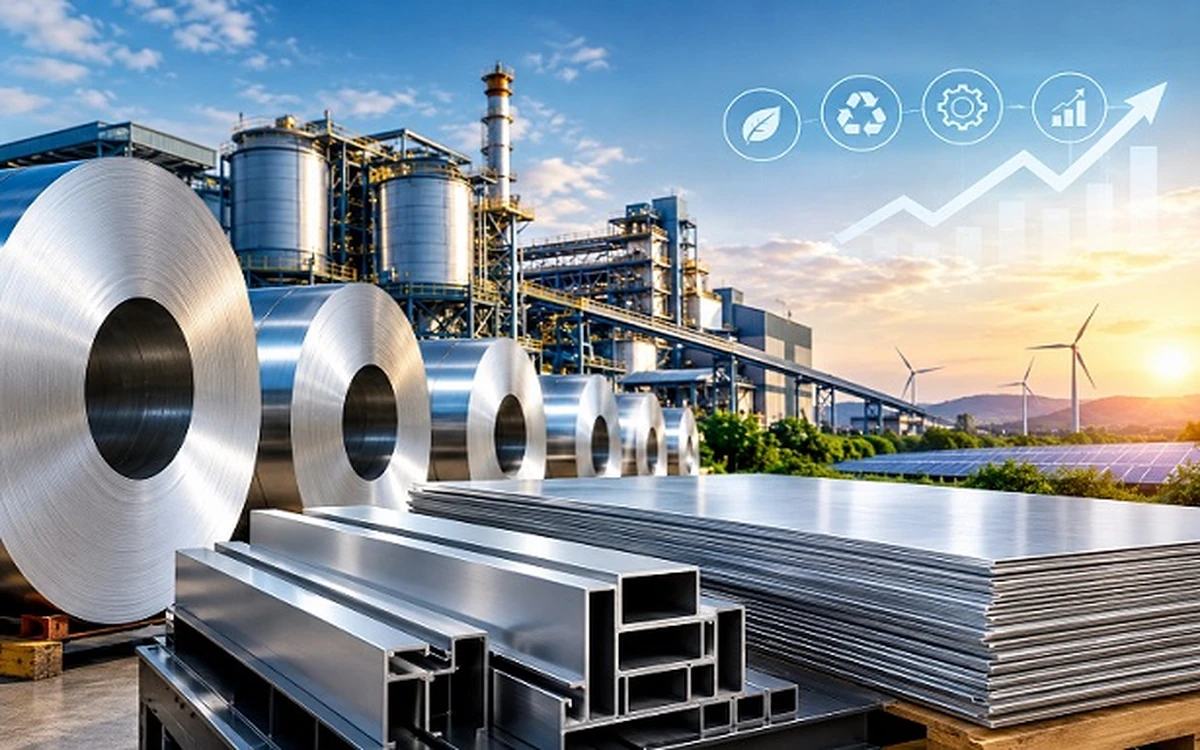
International Outlook: The Global Aluminium market is expected to grow at 4.5% CAGR (approx.) during the period 2026–2033. This growth shall primarily be driven by increasing demand from various end-use industries, including automotive, solar power, construction, packaging, and electrical. It reflects a structural shift driven by transportation, construction and the accelerating green transition that is embedding Aluminium deeper into global supply chains. In 2025, the end-use sectoral percentages were like (transportation & automobile: 28%), (building and construction: 22%), (Packaging: 16%), (electrical and electronics: 15%), (industrial applications: 8%) and (others: 11%).
China’s production ceiling at 45 Million TPA lags its consumption need of 46 Million TPA making it a net importer. Albeit, Chinese producers seek to relocation of production capacities (especially to Indonesia) with riders, including high-carbon power dependence, slow alumina integration, infrastructure and financing bottlenecks, and policy uncertainty. However, consumption in rest of Asia is expected to remain robust in 2026, witnessing adequate demand especially from transport & infrastructure. Aluminium industry is however, expected to remain in structural deficit in 2026 but margin of deficit shall be dependent on the Middle-East curtailments and Capacity expansion timelines considered in projection for 2026.
The strong demand for light weighting & sustainable automobiles intensified Aluminium use. The rapid adoption and scale-up of electric vehicle (EVs) production (battery housings, structural body components etc.) added to overall demand. Infrastructure expansion and real estate activity continue to provide the base to Construction demand. Developing economies emerge as new consumption regions for Aluminium rolled products (particularly in roofing and building materials). Aluminium foil and beverage cans remain resilient owing to sustainability policies and Aluminium circularity. Rising global consumption of canned beverages alongside the shift toward recyclable packaging formats, continues to sustain demand for sheets, foil and aerosol cans. Global energy transition remains a decisive driver for Aluminium consumption in electronics & electrical sector with demand coming from Solar panel frames, wind turbine components, grid upgrades and 5G transmission infrastructure. Artificial intelligence (AI) has also added new layer of absorption with AI data centers requiring substantial Aluminum extrusions thereby increasing demand for Billets. Meanwhile, consumer electronics manufacturers continue to favour aluminium for its thermal conductivity in heat sinks, casings and high-performance components.
Machinery and equipment manufacturing, central to Industrial applications, makes Aluminium the central choice driving demand for wire rod, extrusions and other semi-finished products. Additionally, rising geo-political wars have warranted inflated defence spending and large-scale government infrastructure investments thereby supporting diversified applications.
Overall, Aluminium’s growth is not confined to a single industry or geography. It is embedded in vehicles becoming lighter, cities becoming taller, grids becoming smarter and packaging becoming more circular. However, it remains vulnerable to power costs (competing with AI Data Centers for Power contracts), trade tariffs, potential geopolitical disruption, supply uncertainty, sustainability and regulatory pressure.
Domestic Outlook:
The domestic primary Aluminium consumption in India demonstrated robust resilience throughout FY 2025-26, registering an increase of 8.0% year-over-year reaching 3.10 Million MT. India's total aluminium consumption, encompassing primary metal, scrap, and imports, experienced substantial growth in FY 2025-26, reaching ~6.12 Million MT, an 11.4% growth compared to the previous fiscal year. Domestic metal production reached 4.3 Million MT, marking a 1.4% increase over the previous year.
India is projected to remain the fastest-growing economy. As per RBI, India’s GDP growth was estimated at 7.7% for FY 2025-26 vis-à-vis 7.1% in FY 2024-25. Indian Aluminium Market is expected to grow at a CAGR of around 6.2% – 7.8% till 2030 based on consensus forecast.
Indian Aluminium demand is expected to see healthy growth due to strong government infrastructure development plan, urbanization and growing focus on lightweight vehicles which designates to sectoral demand from Transportation & Automobile, Power & electrical, Construction & Infrastructure, Packaging, Renewable energy & electrification (Solar/EV/Grid). The major consumption sectors in India are electrical (48%), construction (13%), automotive & Transport (15%), consumer durable (7%), machinery & equipment (7%), packaging (4-6%), other’s (6%). The demand for Aluminium in India is expected to remain upbeat with the increasing use in new applications, such as electric vehicles and renewable energy technologies.
India is actively pursuing reductions in carbon emissions and oil import dependency as part of its broader climate and energy security goals, GoI is prioritising accelerated adoption of electric vehicles (EVs) (30% overall EV penetration by 2030). Aluminium plays a key enabling role in EVs by enabling significant vehicle light-weighting, which improves energy efficiency (6–8%) and extends driving range (10–15%).
The Indian primary Aluminium industry faces persistent challenges, including rising imports of value-added products, pressure on domestic market share in downstream segments and increasing production and logistical costs. Global risks such as trade tariffs, supply chain disruptions, geopolitical tensions in West Asia, and currency volatility add further pressure. Cost competitiveness is hampered by non-competitive energy prices and inconsistent coal linkage for the non-power sector. With installed primary Aluminium capacity of approximately 4.2 Million TPA and ongoing expansions in smelting and downstream facilities (both from Primary producers & Downstream manufacturers) realigned to National Economic Growth, Energy transition & Sustainability and Atmanirbhar Bharat goals, India is on track to meet Aluminium demand of around 6.0-6.2 Million TPA.
6 days ago
Total Views : 8
last week
Total Views : 60
last week
Total Views : 51
2 weeks ago
Total Views : 64
2 weeks ago
Total Views : 131
2 weeks ago
Total Views : 129
.webp)
 Join WhatsApp Group
 Join Telegram Channel
 Join YouTube Channel