Loading... Today

-- 0

-- 0
Join Groups & Channels, No Spamming





The Print Times
Industry Overview
Textile
Global Textile Market
The global textile industry witnessed steady growth during FY2025-26, supported by rising demand across fashion, home textiles and technical textile applications despite geopolitical disruptions and evolving trade dynamics. The global textile market was estimated at approximately USD 0.74 trillion in 2025 and is projected to reach around USD 1.02 trillion by 2031, with a CAGR of nearly 5.1% during 2026-2031. Asia-Pacific retained its position as the largest textile manufacturing hub globally, accounting for over 54% of global output, supported by integrated supply chains, competitive manufacturing ecosystems and strong export capabilities.
The industry landscape evolved amid shifting sourcing strategies, stricter compliance requirements and rising sustainability expectations. Global brands accelerated supply chain diversification, traceability initiatives and certified sourcing practices in response to changing trade regulations and geopolitical uncertainties. Regulatory developments such as the EU Digital Product Passport further encouraged investments in digital supply-chain infrastructure, recycled fibres and sustainable manufacturing solutions.
The global home textile segment recorded healthy growth during the year, driven by rising consumer spending on home decor, wellness-oriented living spaces and premium furnishing products. Demand remained strong across bed linen, bath linen, carpets and upholstery categories, supported by residential housing growth, hospitality refurbishment activities and organised retail expansion. The global home textile market was estimated at around USD 136.25 billion in 2025 and is expected to grow steadily, supported by increasing preference for branded and value-added furnishing products.
Global cotton production stood at nearly 119.9 million bales during 2025-26, while consumption remained stable at around 118.7 million bales. China, India and Brazil remained the leading cotton-producing countries, while Bangladesh, Vietnam and China dominated textile manufacturing and cotton imports.
Going forward, the global textile industry is expected to benefit from premiumisation trends, sustainability-led investments, digital transformation and supply-chain realignment initiatives. Countries such as India and Vietnam are likely to strengthen their position within global textile supply chains under the ongoing China-plusone sourcing strategy adopted by global brands and retailers. Increasing investments in recycled fibres, circular manufacturing systems, technical textiles and renewable-energy-based production infrastructure are also expected to support long-term industry growth.
Indian Textile Market
India’s textile industry witnessed a year shaped by shifting global sourcing strategies, expanding trade partnerships and sustained policy support aimed at strengthening domestic manufacturing capabilities. As global brands increasingly diversified supply chains beyond China and focused on reliable, large-scale sourcing destinations, India further strengthened its position as a key textile and apparel manufacturing hub supported by its integrated value chain, abundant raw material base and growing manufacturing ecosystem.
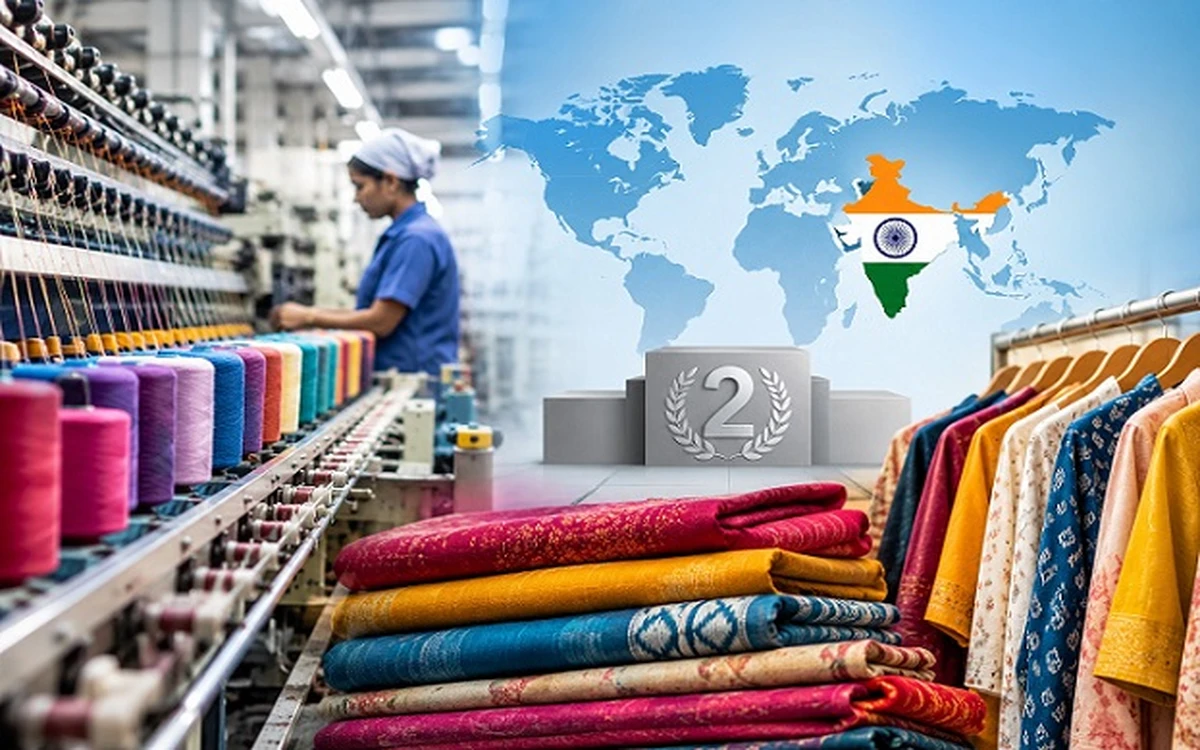
The domestic textile and apparel market was estimated at around USD 225 billion in 2025 and remained one of the largest contributors to India’s manufacturing economy. India retained its position as the world’s second-largest producer of textiles and garments and the sixth-largest textile exporter globally, with a 4.6% share in global textile and apparel trade.
India’s textile exports demonstrated resilience during FY2025-26 despite geopolitical disruptions and evolving tariff structures. Total textile exports, including handicrafts, increased by 2.1% to INR 3.16 lakh crore, supported by growth across readymade garments, man-made textiles and value-added product categories.12 Export momentum remained broad-based across several international markets including the UAE, UK, Germany, Spain and Japan, while ongoing trade agreements with the UK, EU, EFTA and other regions are expected to further strengthen India’s access to global markets.
India’s home textile segment also maintained healthy growth momentum, supported by rising urbanisation, premiumisation trends, organised retail expansion and increasing consumer spending on home decor and lifestyle products. The Indian home textile market reached approximately USD 4.51 billion in 2025 and is projected to grow steadily over the long term, supported by strong demand across bed linen, bath linen and furnishing products.
.webp)
 Join WhatsApp Group
 Join Telegram Channel
 Join YouTube Channel