Loading... Today

-- 0

-- 0
Join Groups & Channels, No Spamming





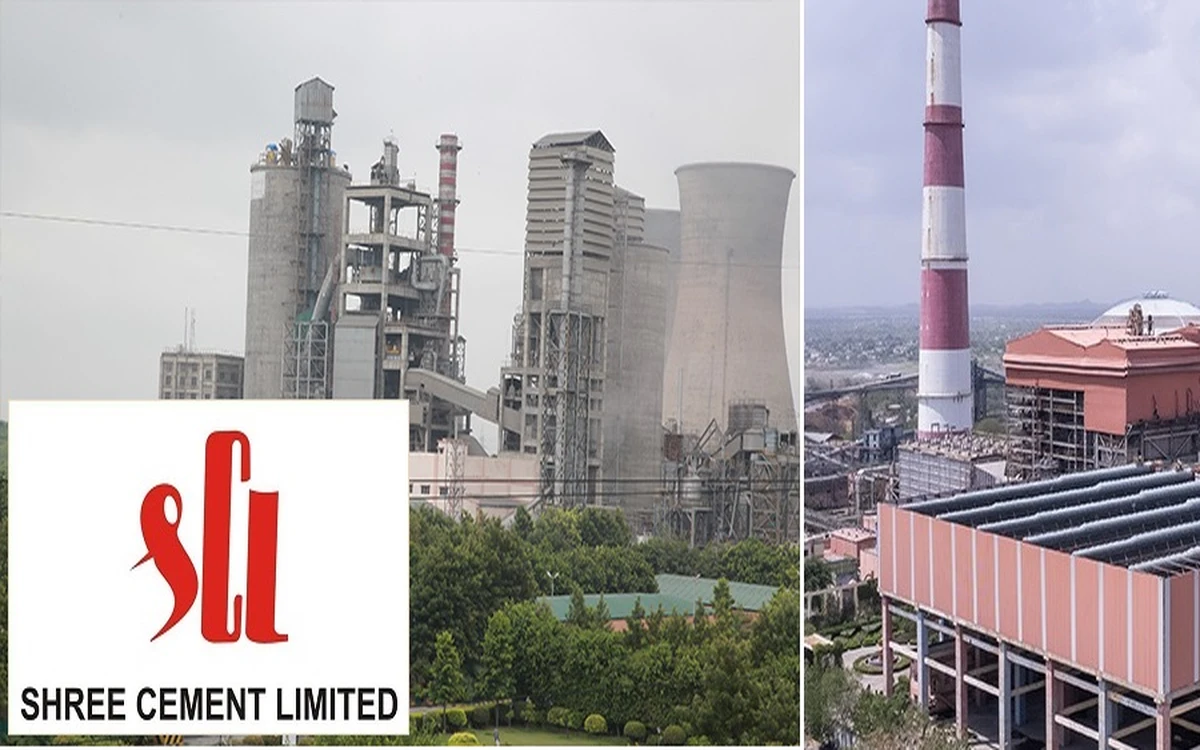
Shree Cement has urged investors to focus on consolidated financials as overseas and subsidiary businesses continue to increase their contribution, with the standalone business expected to account for 75-80% of total revenue in the coming years. The company said the Middle East conflict disrupted supplies of pet coke and Omani gypsum, resulting in higher production costs and lower trade sales during Q1 FY27. Management expects input costs to moderate as contracted fuel supplies resume and packaging costs decline, indicating that production costs have likely peaked in the first quarter.
The Print Times
July 31, 2026: Shree Cement Limited has urged investors and analysts to evaluate the company's consolidated financial performance instead of standalone results, as the contribution from its overseas and domestic subsidiaries continues to increase.
Shree Cement is among India’s top three cement producers, built on a legacy of smart entrepreneurship, innovation, cost consciousness, and operational excellence. With an installed cement capacity of 69 MTPA in India and 73 MTPA including overseas operations, the company continues to grow with purpose and efficiency. Supported by 888.55 MW of installed power generation capacity, Shree Cement remains focused on building a stronger, more sustainable future.
Speaking during the Q1 FY27 Earnings Conference Call, Mr. Ashok Bhandari, Senior Advisor, Shree Cement Limited, said nearly 10% of the company's turnover during the quarter came from its overseas subsidiary and wholly owned domestic subsidiary, while the standalone business contributed around 88-89% of total revenue.
He stated that with the ongoing expansion at the company's Ras Al Khaimah plant in the UAE, where capacity is expected to double and become operational by the third quarter of FY26-27, along with increasing market penetration by Shree Cement East, the share of non-standalone businesses will continue to rise.
According to Mr. Bhandari, the standalone business is expected to contribute around 75-80% of total revenue in the foreseeable future, while subsidiaries could account for 20-25%. He said consolidated financial results would therefore provide a more transparent picture of the company's overall grey cement business.
Commenting on operational challenges during the quarter, Mr. Bhandari said the company faced significant disruptions due to the Middle East conflict, which affected the availability of key raw materials and fuels.
He explained that contracted shipments of pet coke failed to reach the company, forcing it to shift fuel consumption towards coal. As a result, the share of pet coke in the fuel mix declined sharply from 54% to 9%, while coal usage increased from 32% to 81%.
The company also faced disruptions in the supply of contracted gypsum from Oman, compelling it to procure domestically available gypsum, which was both more expensive and of comparatively lower quality.
Mr. Bhandari said these developments increased the company's cost of production on two fronts. The higher gypsum prices directly raised raw material costs, while the lower-quality coal increased ash content during clinker production, reducing the clinker-to-cement conversion factor.
According to him, the higher ash content in clinker limited the proportion of pozzolanic and other cementitious materials that could be blended into cement, resulting in increased clinker consumption and higher manufacturing costs.
The lower conversion factor also influenced the company's product mix, leading to higher production of Ordinary Portland Cement (OPC), which is primarily sold in the non-trade segment. Consequently, Shree Cement experienced both higher production costs and comparatively lower realisations because of the larger share of non-trade sales.
Mr. Bhandari clarified that these developments do not reflect the company's long-term operating strategy. He said Shree Cement intends to return to its earlier approach of improving the clinker-to-cement conversion factor, optimising production costs and increasing the share of trade sales.
He also indicated that the company's embedded fuel costs have likely reached their peak. The lower-cost contracted pet coke supplies, which had been delayed due to the conflict, have now started arriving and are expected to gradually replace the higher-cost fuel procured during the disruption.
He noted that fuel costs had increased from around Rs. 1.82 per kcal to nearly Rs. 1.95 per kcal during the period due to the temporary shift in fuel sourcing.
Looking ahead, Mr. Bhandari said that, barring any further escalation in the Gulf region, fuel prices appear to have peaked. He added that PVC prices have already started declining, while packing costs are also witnessing a reduction, providing additional support for cost optimisation.
Although the company had earlier expected production costs to peak during the second quarter of FY27, Mr. Bhandari said recent developments suggest that costs have likely peaked in the first quarter itself, setting the stage for improved operating performance in the coming quarters.
.webp)
last week
Total Views : 84
last week
Total Views : 31

2 weeks ago
Total Views : 142
2 weeks ago
Total Views : 47
.webp)
 Join WhatsApp Group
 Join Telegram Channel
 Join YouTube Channel